Demystifying TURF and bootstrap TURF: A Practical Primer
Have you ever faced the challenge of picking the “best” lineup—whether it’s a set of flavors, product features, or even a team roster—and wondered if you could really trust the answer? Most decision tools give you a single “best” list, but what if a small change in your data could flip the results? That’s a hidden risk in traditional lineup selection, and it’s a problem more common than you might think.
What is TURF, and Why Does It Matter?
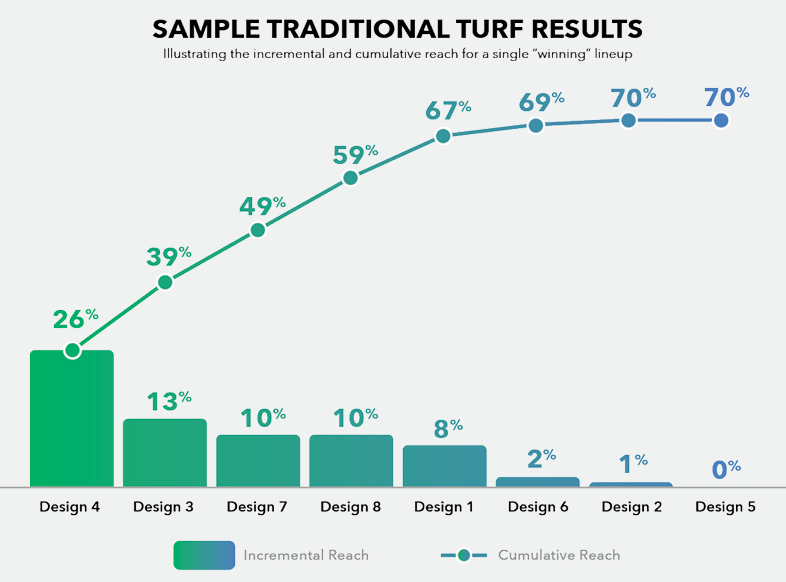
TURF stands for Total Unduplicated Reach and Frequency. It’s a popular tool among researchers, marketers, and product managers for deciding which combination of options (like flavors, features, or products) will reach the largest possible audience. For example, if you’re launching a new snack line, TURF helps you pick the mix of flavors that will appeal to the most people.
What Does “Greedy TURF” Mean?
The most common way to run TURF is with a greedy algorithm. In plain language, “greedy” just means the algorithm always picks the single best option at each step, without looking ahead. So, it picks the flavor that reaches the most people first, then picks the next best from the remaining options, and so on. This step-by-step process is fast and intuitive, but it can be sensitive to small differences in your data—especially at the beginning.
The Cascade Effect: Why Small Changes Can Have Big Consequences
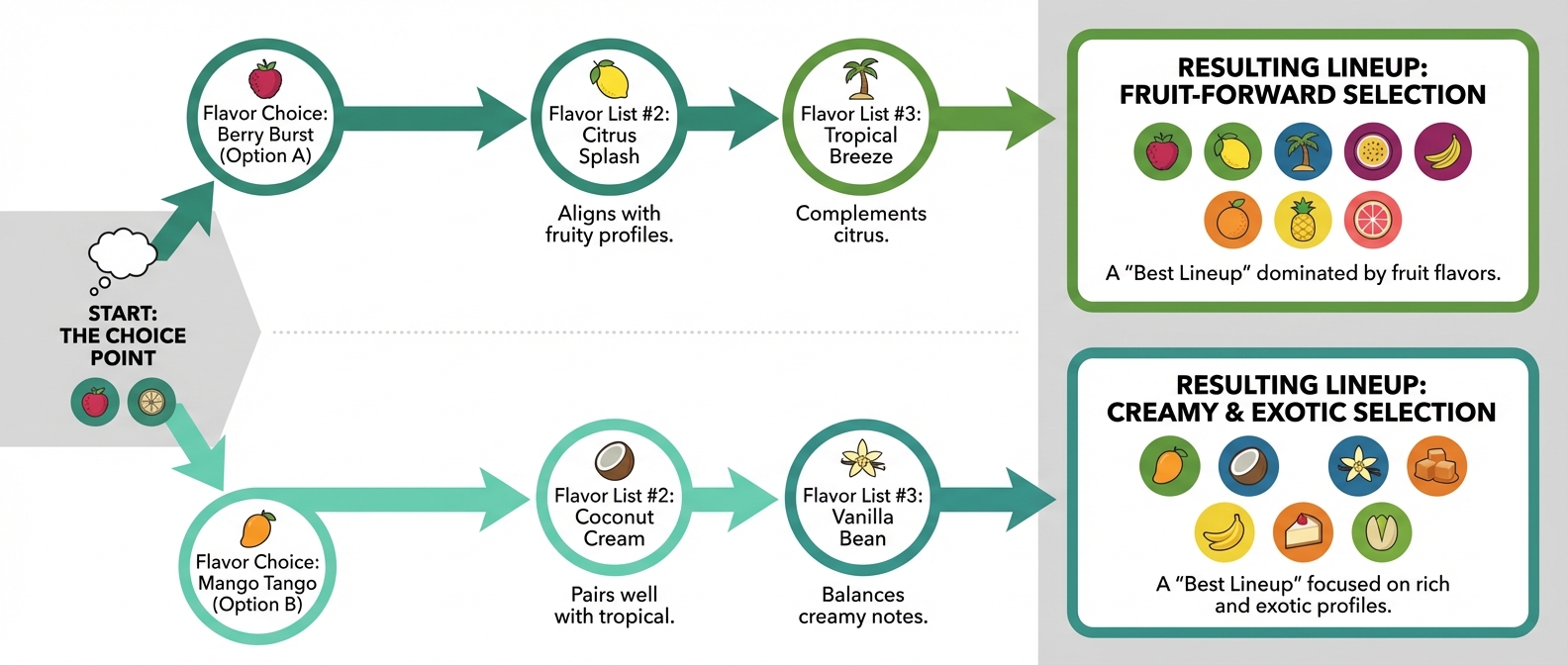
Let’s say you’re choosing which flavors to launch. If two options are nearly tied for the top spot, whichever one you pick first can change the rest of your list. This is called the cascade effect: tiny differences early in the process can snowball, leading to very different outcomes. The end result is that you get one “best” lineup, but you don’t know how stable or reliable that answer really is.
What is Bootstrapping, and Why Use It with TURF?
Bootstrapping is a statistical technique that helps you measure how much your results might change if you collected a slightly different sample of data. Imagine running the same TURF analysis hundreds of times, each time with a slightly tweaked version of your dataset. Bootstrapping shows you how often each option would be chosen, and which positions in your lineup are truly stable.
Meet bootstrap TURF: Bringing Clarity to Lineup Choices
That’s where bootstrap TURF comes in. Instead of just giving you a single list, bootstrap TURF uses resampling (bootstrapping) to reveal:
- Which choices are true “anchors”—the ones that show up at the top almost every time.
- Which positions could easily be swapped with others, indicating uncertainty or interchangeable options.
For example, if one flavor is the top pick in 90% of resamples, you can be confident it’s a must-have. But if several options are nearly tied for a spot, bootstrap TURF highlights that uncertainty, letting you know those choices are interchangeable.
Why This Matters for Decision Makers
With bootstrap TURF, you get more than just a list—you get actionable insights:
- Confidence in Stable Choices: Know which options are truly robust.
- Transparency in Uncertainty: See where your list could change, and plan for flexibility.
- Defensible Recommendations: Present multiple strong lineups or highlight “tiers” of options, rather than a single, possibly unstable answer.
This means smarter, more transparent decisions and less risk of overconfidence in a single, potentially misleading solution.
When Should You Use Bootstrap TURF?
If you’re making lineup decisions where the stakes are high—like product launches, feature prioritization, or menu design—and you want to be sure your choices are robust, bootstrap TURF gives you the clarity and confidence you need. It’s especially valuable when your options are closely matched, or when you want to communicate uncertainty and flexibility to stakeholders.
Practical Scenarios
- Product Optimization: Choose features or flavors with confidence and communicate the reasoning to stakeholders.
- Portfolio Management: Understand which items are essential, and which can be swapped based on cost or feasibility.
- Retail Merchandising: Select the optimal mix of products for store shelves, ensuring maximum customer reach while adapting to inventory or space constraints.
- Digital Content Curation: Select the best mix of articles, videos, or playlists to maximize audience engagement.
- Menu Design: Curate a restaurant or café menu to appeal to the widest range of customers.
Ready to Go Deeper?
We’ve put together a detailed whitepaper explaining how bootstrap TURF works and why it’s a game-changer for lineup decisions. If you want to make your next lineup decision with eyes wide open, click here to download the full whitepaper. Or reach out to our team to see how bootstrap TURF can help you make more confident, data-driven choices.