Linear Discriminant Analysis
Distinguishing Groups with Precision
Linear Discriminant Analysis (LDA) is a powerful statistical technique used for classification and dimensionality reduction. At Bellomy, we leverage LDA to help our clients identify distinct groups within their data, enabling informed decision-making and strategic planning.
Understanding Linear Discriminant Analysis
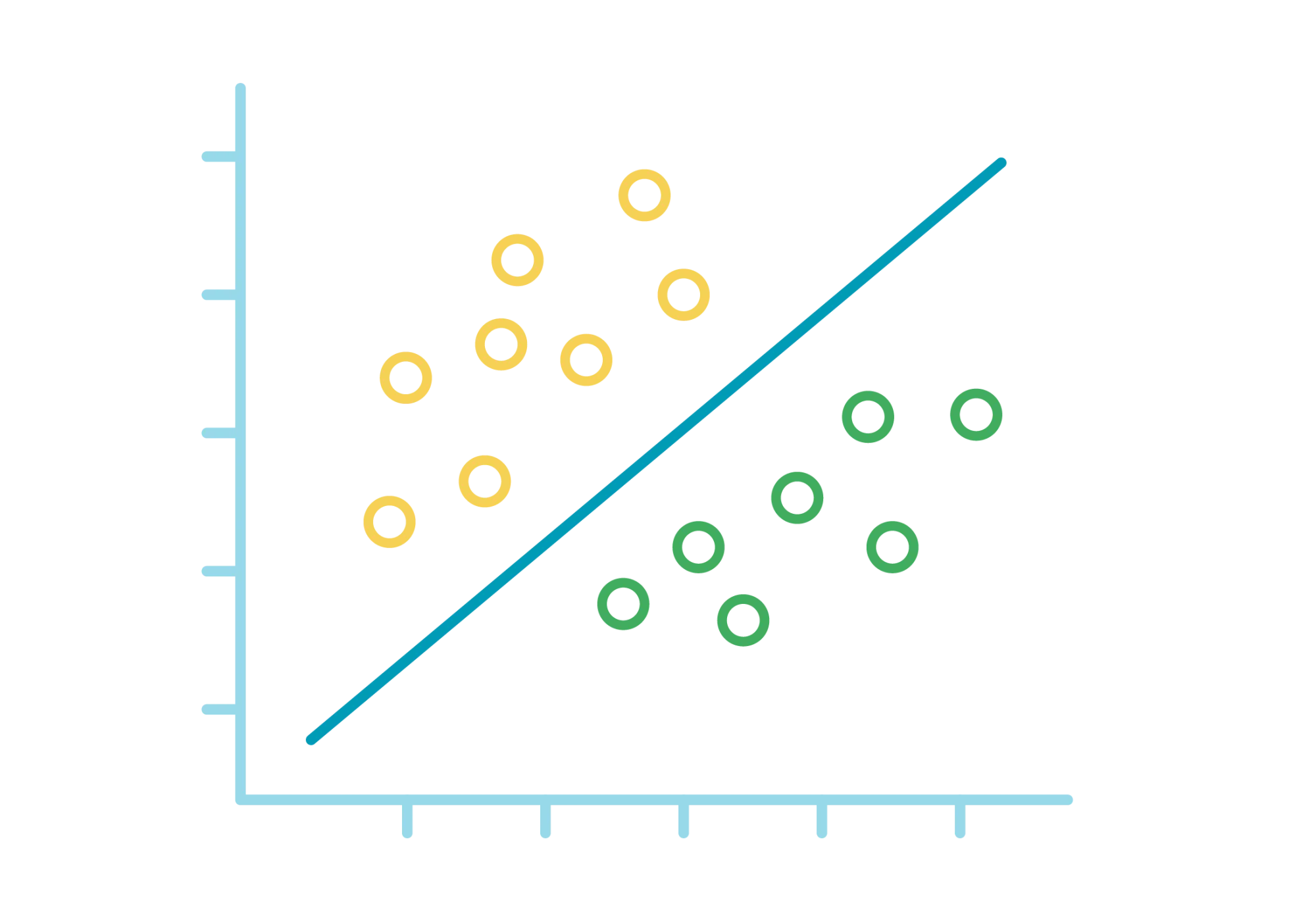
LDA is a method used to find a linear combination of features that best separates two or more classes of objects or events. By projecting data onto a lower-dimensional space, LDA enhances the separation between groups, making it an effective tool for classification problems.
How It Works: LDA maximizes the ratio of between-class variance to within-class variance, ensuring that the projected data points are as distinct as possible. This is achieved by identifying a linear boundary that optimally separates the classes.
Dimensionality Reduction: In addition to classification, LDA reduces the dimensionality of data, simplifying complex datasets while preserving class-discriminatory information.
LDA in Segmentation: At Bellomy, we primarily use LDA to create typing tools for segmentation. By identifying the distinguishing characteristics of each segment, LDA enables us to classify new data points efficiently, ensuring that each individual is accurately placed within the appropriate segment. This application is crucial for tailoring marketing strategies and delivering personalized experiences.
Advantages of Linear Discriminant Analysis
LDA offers several advantages that make it a valuable choice for data analysis:
Effective Classification: LDA provides clear decision boundaries, making it well-suited for distinguishing between multiple classes.
Interpretability: The linear nature of LDA makes it easy to interpret and understand, offering insights into the relationships between features and class membership.
Robustness: LDA is not heavily impacted by either sample size or noise, making it reliable for a wide range of applications.
Key Considerations
Conducting LDA involves several considerations to ensure optimal performance:
Assumptions: LDA assumes multivariate normality and equal covariance among classes. Meeting these assumptions is crucial for accurate classification.
Feature Selection: Selecting relevant features is important for effective LDA, as irrelevant or redundant features can reduce performance.
Class Balance: Ensuring balanced class sizes helps maintain the stability and accuracy of the LDA model.
The Bellomy Advantage
At Bellomy, we combine the power of LDA with our deep expertise and commitment to client collaboration. Our tailored approach ensures that LDA models deliver actionable insights aligned with your business goals.

Explore LDA with Bellomy
Unlock the potential of your data with Bellomy's LDA expertise.
Our team is ready to guide you through the intricacies of your data, providing insights that drive success. Let us help you harness the power of Linear Discriminant Analysis to make informed, data-driven decisions.
This site is protected by reCAPTCHA and the Google Privacy Policy and Terms of Service apply. Your details will be held in accordance with our Privacy Policy.
We'll reach out via email unless you'd prefer to be contacted by phone—please let us know!